Norwegian Genealogy – Find Your Norwegian Ancestors
Sources, method and tools for tracing your family in Norway – thorough, well-documented and with a source for every link.
Behind every one of us stand two parents, four grandparents, eight great-grandparents and sixteen great-great-grandparents. Ten generations back, around the year 1700, there are more than a thousand places in your family tree – cotters and farmers, fishermen and servant girls, soldiers, priests and sailors.
If any of them were Norwegian, you are in luck. Norway has some of the best genealogical records in the world – complete censuses from 1801, church records from the 1600s, and local farm histories for almost every parish – and nearly all of it is free online.
This site explains how Norwegian genealogy works, which records exist, what the Norwegian words in them mean – and how you find your own Norwegian ancestors, whether you live in Norway or in Minnesota.
You will also find our entire family tree here: almost 4,000 ancestors in the Holt family and the Zahlsen family, with a source for every person, and the chronicles that tell their stories. Open the family tree.
Who is behind this site?
My name is Svein Roar Holt, and I live in Trondheim, Norway. I grew up with two parents who were both genealogists, so my interest in family history and records came from home.
In my daily work I deal with management systems and internal control, where everything must be documented and verifiable – through Helhetskontroll and Internkontrollportalen, among others.
I have built my genealogy on the same foundation: every link must have a source, and it must be stated honestly what is proven and what is only probable. Slektforskning.no is where my parents’ legacy and my profession meet.
Are we related? Search our ancestors
Search among almost 4,000 ancestors in the Holt family and the Zahlsen family – by name, farm or parish. If you recognise an ancestor, we may share ancestors, and we would love to hear from you. The search page is in Norwegian, but you can search names, farms and places as they are written.
Read the chronicles
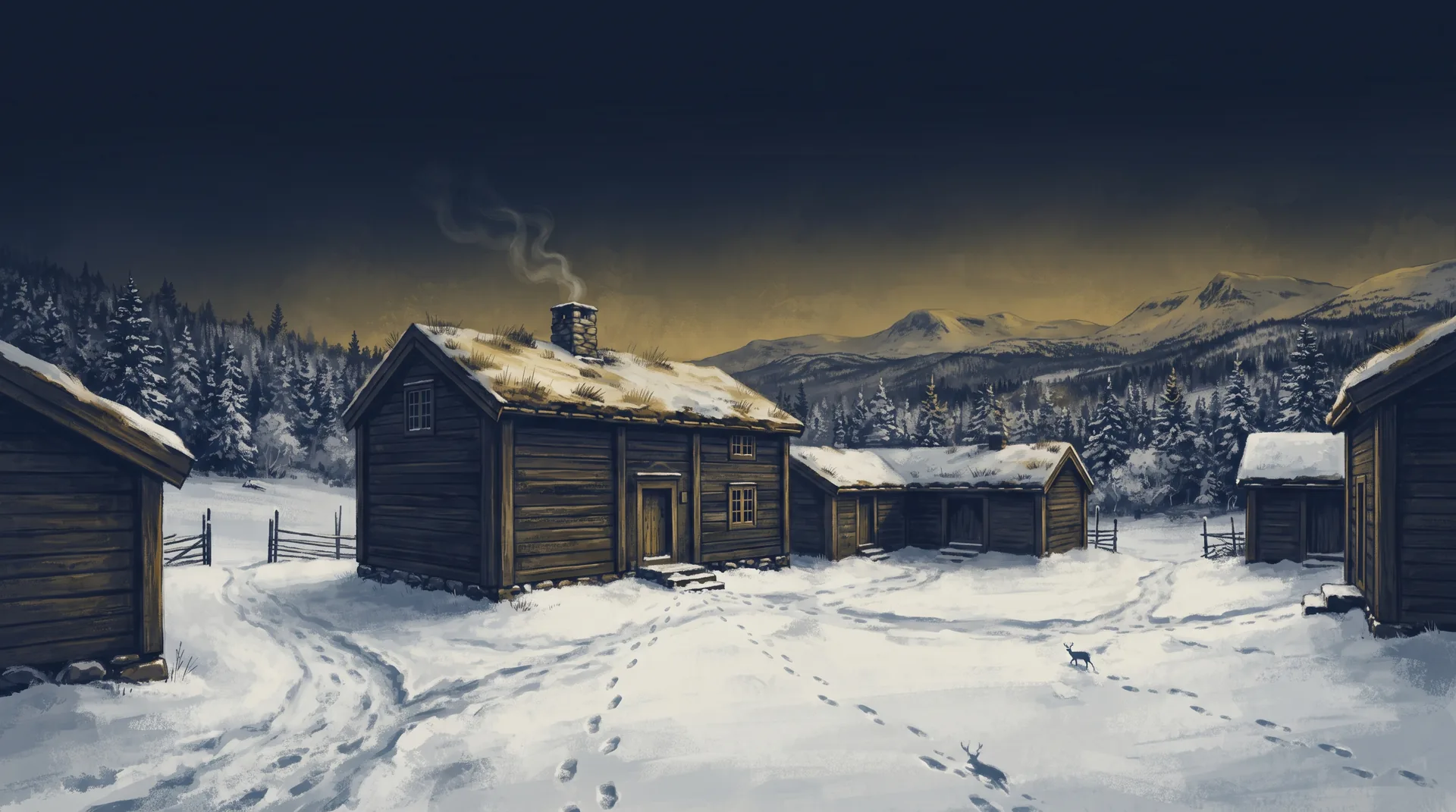
Eight stories of the families behind the Holt family – from the medieval villages by Lake Mjøsa and the Finn forests to the mountain valleys and the city by the Akerselva. Written from the records, with sources (in Norwegian).
Latest articles
-
Are we related, Maria? Yes – and so are most of us
Our families lived many hundreds of kilometres apart. Even so we share 133 ancestors and a royal line. That is how it is for…
-
The boy without a father: how DNA and church books found my great-grandfather’s father
For more than a hundred years my great-grandfather Albert’s father was just a name in the church book. How DNA showed where to look,…
-
Online trees are leads, not sources: six errors the source check stopped
Leads from online trees and summaries often look entirely right. Here are six errors that were stopped because every detail is checked against the…
-
Same name, two men: why I did not merge Hans Syversen
Two men with the same name in the same parish is one of the commonest sources of error in genealogy. An example from Vågå…
Why Norwegian genealogy is different
Three things make Norwegian research special, and you need to understand all three early:
Patronymic names. Until surnames became mandatory with the Names Act of 1923, most Norwegians were named after their father: Ole Hansen was Ole, son of Hans, and his sister was Kari Hansdatter. The “surname” changed with every generation.
Farm names. People were also known by the farm they lived on – and the name could change when they moved. The same man may appear as Ole Hansen Bakken in one record and Ole Hansen Moen in the next. Many emigrants took a farm name as their American surname. The farm is often the key to your family.
Dates and spellings. Older records are often dated by the church calendar (“the third Sunday after Trinity”), and names are written as the priest heard them: Marthe and Marte, Christian and Kristian may be the same person.
The sources
Almost all Norwegian records are free at Digitalarkivet (digitalarkivet.no), run by the National Archives of Norway:
- Church records – baptisms, confirmations, marriages and burials from the 1600s. → Church records
- Censuses – 1801, 1865, 1875, 1891, 1900, 1910 and 1920, showing whole households. → Censuses
- Bygdebøker – local farm and family histories, digitized at the National Library (nb.no). → Bygdebøker
- Emigration records – police protocols in the Norwegian ports. → Emigration
- Probate records, court records, tax lists and military rolls – for the 1600s and 1700s. → All sources
From America to Norway
Around 800,000 Norwegians emigrated between 1825 and 1930. Today, millions of Americans have Norwegian roots. If you are one of them, the path is usually:
- Find your emigrant ancestor in US records – census, naturalization, church records, obituaries.
- Find the farm or parish in Norway the family came from.
- Find the family in the Norwegian emigration protocols and censuses.
- Follow them back in the church records and the bygdebok for the parish.
Our step-by-step guide walks you through it, and DNA can help you find cousins on both sides of the Atlantic.
Research method
Good genealogy is not about the most names, but about links that can be proven. Use primary sources written at the time, let several sources confirm each other, separate what you know from what you believe, and always record your source. Read more about method.
About this site
On Slektforskning.no I present my own and my wife’s families – the Holt family from eastern Norway and the Zahlsen family from Nordland. The family trees are presented with sources for every link, so that anyone can verify the research. Living persons are never shown.
The name slektforskning – “researching one’s own family” – reflects what most of us do: not genealogy in general, but the story of our own people.