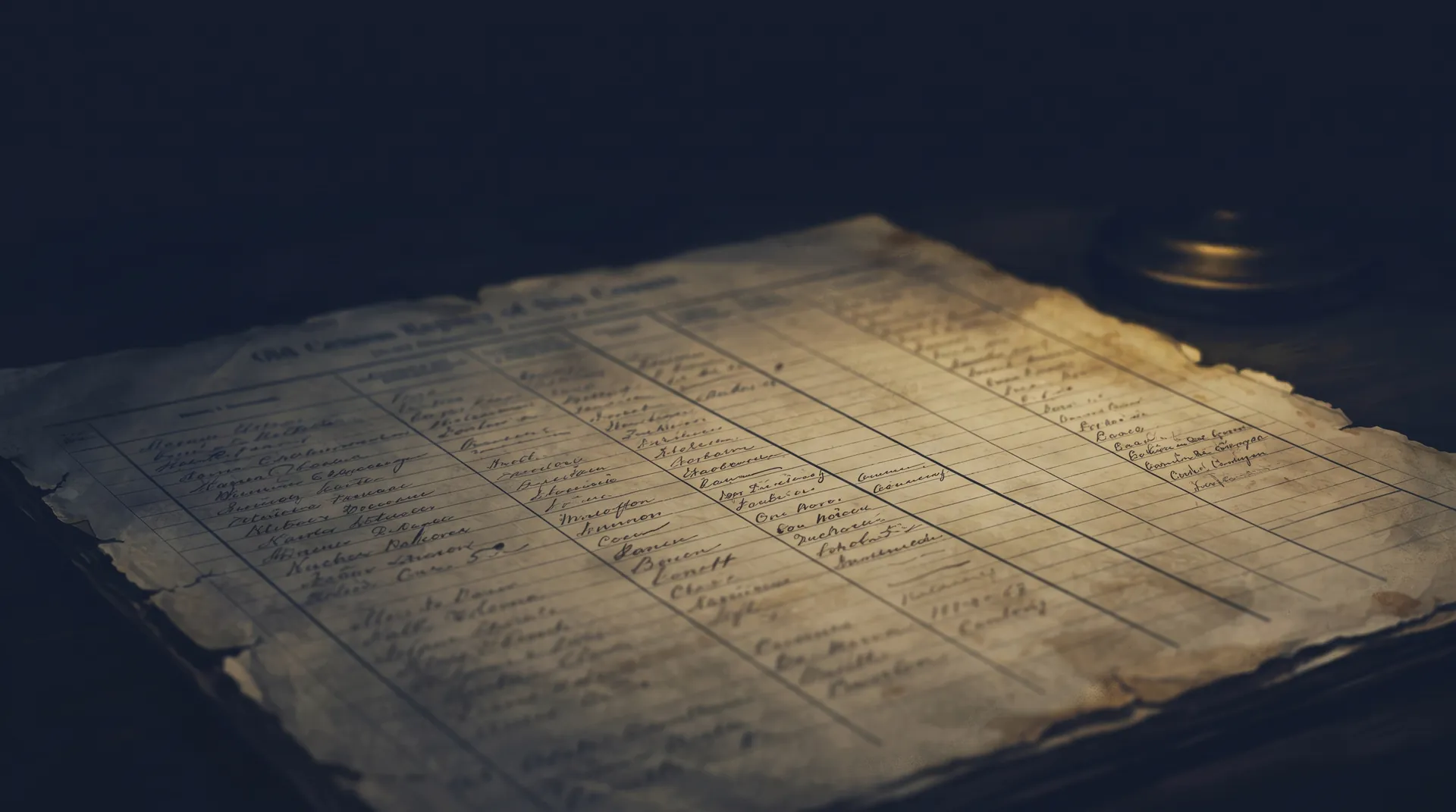
The court books (tingbøker) record the local courts, where the district judge and local farmers heard lawsuits, registered land sales and settled allodial claims. For genealogists, they can prove relationships when no other source does – and give a rare, vivid picture of people and their conflicts.
What you find in the court books
- Deeds and leases: who bought, sold or leased a farm, and from whom.
- Allodial claims (odel): to reclaim a farm by odel right, a claimant had to prove descent – often several generations back.
- Inheritance disputes.
- Paternity cases for children born out of wedlock, where the father was named.
- Criminal cases and disputes – fights, slander, debt and boundaries – with witnesses who often state age and residence.
Mortgage books and land registers
From the 1700s, sales and mortgages of real estate were recorded in pantebøker, with panteregistre arranged farm by farm. With the land register you can follow the owners of a farm back in time and find the deeds showing who took over from whom.
Where to find the court records
Court books, mortgage books and land registers are scanned at Digitalarkivet: digitalarkivet.no – search for the judicial district (sorenskriveri). For many districts there are also transcriptions and indexes by local historians; search the National Library: nb.no
Tips
- Start with the land register for the farm.
- The oldest court books are hard to read. Take them in small portions, and use the glossary.
- Allodial cases are gold for genealogists – look for them when a farm changed hands within the family.
Written by Svein Roar Holt · Last updated 9 November 2026 · About us